

Research Abstract
Since the summer of 2019, Museum Studies and Chemistry students at the University of Tampa have collaborated on the “Potential Picasso Project,” an interdisciplinary investigation of a “thrift shop” painting signed “Picasso 1905” in the lower left corner. This project installment utilizes art historical and forensic graphological resources to conduct a forensic analysis of the signature evidence to determine if attribution of the subject artwork can be made to Pablo Picasso according to his signature conventions from 1904 to 1906. The year 1905 is significant when conducting art historical research regarding Picasso, as it marks a shift from his stylistic “blue period” to “rose.” Therefore, signed, authentic oil paintings painted by Picasso across both stylistic periods (during the years 1904, 1905, and 1906) have been selected to create a graphological profile of Pablo Picasso to compare against the subject artwork. Concurrently, a statistical analysis of a sample of Picasso’s main body of work from these periods, pulled from a catalog raisonné, determined how often and where Picasso signed his work and how often he dated it.
Keywords: Pablo Picasso, Forensic Signature Analysis, Art Authentication, Interdisiplinary Research
Fall 2022
I began my research in Fall 2022 by familiarizing myself with the painting by conducting a condition report of the overall painting and then a closer report of the signature itself:
| Condition Report of the Potential Picasso Painting |
| This painting is horizontally oriented depicting a woman lying on her side. The work consists of many harsh black lines and blocks of color that make up the woman’s figure and the background behind her. The painting is not in its original frame, as seen by several staples’ holes in the back, as well as vertical chipping and folding lines seen on the work; however, the frame it is currently in is not in good condition, being held together by scotch tape in several places. The painting has some damage throughout the main body of the work, most prevalently seen on the bottom right corner: the black paint is chipped and cracked off, most likely due to this work’s time folded or rolled up. There appears to be many different layers within this painting. Most of the black base lines look like they were done by a line brush, the splotches of color done by palette knives, and more black lines done on top of the sections of color done by a larger brush. These layers were also painted at several different points of time, sometimes not even allowing the bottom layer to dry completely (There are several areas where the top layer of black lines was painted before the colored sections were done drying (i.e., White section, on the left-center area of the painting, the face, and the signature)). |
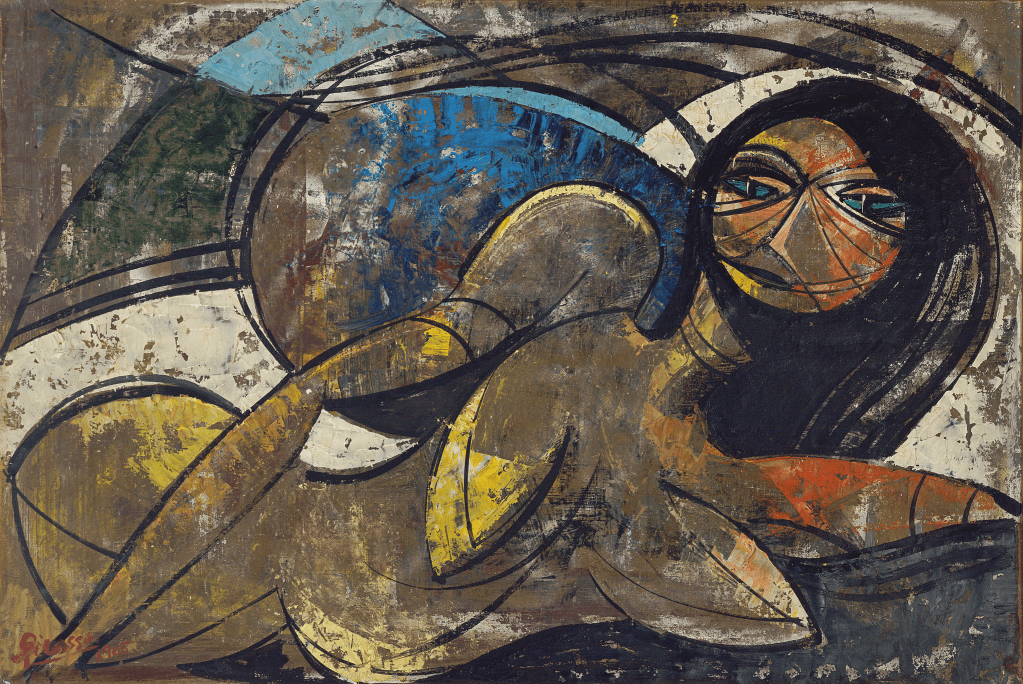
Figure 1: Photograph of the subject artwork, signed ‘Picasso 1905’ in the bottom left-hand corner in red paint. Photo Credit: Jocelyn Boigenzahn
| Condition Report of the Signature found on the Potential Picasso Painting |
| This painting is signed at the bottom left corner of the work. The signature is done in a color not seen in any other part of the painting except for a tiny area of the face. The signature is poorly painted compared to the year, meaning when the name was painted, there needed to be more paint on the brush to get a clean signature, leaving it very streaky. Meanwhile, the date is incredibly clear and has no streaks in it. The signature was also painted when the previous layer of paint was still somewhat wet, as seen by the streak of black paint in the red ‘a’. |

Figure 2: A close-up of the signature found on the subject artwork. Photo Credit: Author
After conditioning reporting the subject piece, I began searching for any similar projects or if a complete collection of Picasso’s works from 1904 to 1906 had ever been published. I quickly found a similar project conducted by Veritart, a Chilean art investigation company, which helped establish the skeleton structure for the methodology for my study. The study conducted by Veritart used a large database consisting of verified signatures from Picasso across his lifespan, and then used those signatures to establish class and individual characteristics. Shortly after finding Veritart’s study, I found a catalog raissonne published with Picasso’s approval shortly before his death which included 333 authentic Picasso works from 1904 to 1906, as well as curator essays and analyses.
Following the methodology set by Veritart, I dedicated my fall semester to building my own signature database of Picasso’s signatures using the catalog raissonne I had found, researching the validity of forensic graphology, and establishing Picasso’s general signature habits. I compiled my signature database in Excel, which made transfer of data over to SAS relatively easy, which helped me establish a statistical foundation for the class characteristics of my research. Although I have never used SAS before this project, I was aided in the statistical analysis of this project by Brooke Yost, a graduate student at the University of South Florida. Together with Yost, I reached the following conclusions about Picasso’s signing habits:
| Descriptive Statistics: |
| The purpose of this data collection was to determine the frequency of Pablo Picasso’s signage elements in a sample selection of his works ranging from 1904 to 1906 (Appendices A-H). This data collection had a sample size of 333 works (N = 333). There were 2 groups (Entire Body/Oil Paintings) and 4 variables present in this data collection: 1) Did Picasso sign his work (Yes/No) (Nominal Variable), 2) Where is the signature located (right, left, top/bottom right, top/bottom left, top/bottom center, and on the back) (Nominal Variable), 3) Did Picasso date his work (Yes/No) (Nominal Variable), 4) Is the signature underlined (yes, no, or could not be determined) (Nominal Variable). For his Entire Body of work (N = 333), it was determined that Picasso signed his work 78% of the time (VR = 0.22). Of his signed works (N = 261), he most frequently (39.1%) signed them in the bottom right corner (VR = 0.61), dated them only 16% of the time (VR = 0.84), and underlined them 44% of time (VR = 0.56). For his Oil Paintings (N = 68), it was determined that Picasso dated his work 75% of the time (VR = 0.25). Of his signed works (N = 51), he most frequently (29.4%) signed them in the bottom right corner (VR = 0.71), dated them only 16% of the time (VR = 0.84), and underlined them 47% of time (VR = 0.53). |
Excel Databases:
Alongside this compilation of signatures, I researched how forensic graphology is currently used in the federal court system, and if it can be used as a legitimate method of verification. Coincidentally, I had been assigned a term paper in my CRM 307: Crime Scene Investigation course about handwriting analysis, which I ended up applying to this research project.
While researching this paper, I learned that Graphology is an observational scientific study involving the analysis and categorization of handwriting characteristics to prove authorship. Forensic Graphology was legitimized under the Federal Rules of Evidence 702 precedent set by Daubert v. Merrel Dow Pharmaceuticals (1993) during the United States vs. Paul (1999) trial, however, it is most well-known for aiding in the capture of the Lindenberg baby kidnapper during State v. Hauptmann (1935). I also learned during this essay that according to Martire et al. (2018), professional handwriting analysts usually only have an error rate average of 22%, while amateur analysts have an error rate average of 26%, which did raise my confidence / comfortability in conducting this research project. While forensic graphology alone cannot confirm nor deny if Picasso painted the subject artwork, it can confirm several other things that can aid in attribution confirmation when paired with other historical, chemical, or stylistic pieces of evidence, such as the results from other project installments.
I concluded my Fall 2022 research by selecting the pieces from my signature database that I intended to pull for a further graphological analysis for individual characteristics during the spring 2023 semester. Girl with Goat (1906), Self Portrait with Palette (1906), Woman with Loaves (1906), Lady with Fan (1905), Family of Saltimbanques (1905), and The Old Guitarist (1904)
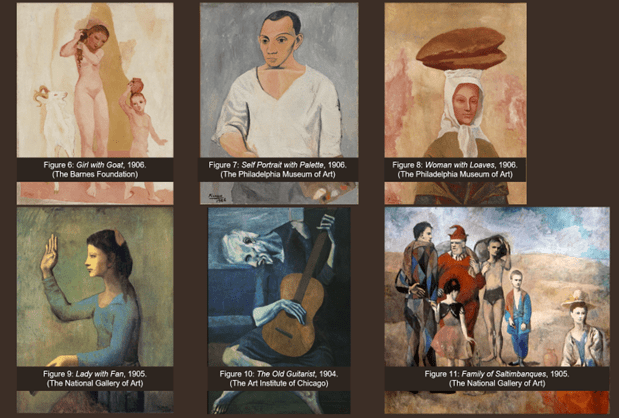
Figure 3: A screenshot of my NCUR oral presentation PowerPoint featuring the six paintings I selected for further graphological analysis
Spring 2023
I began the Spring 2023 semester by preparing for my research poster presentation at the Florida Undergraduate Research Conference (FURC).
Unfortunately, I could only access 6 of the 51 signed paintings from this time, considering my time restraint for this research project. However, with these 6 signatures at my disposal, I began by creating a kind of signature map for each signature, where I analyzed each letter in the signature and pulled any individual characteristics from it. For FURC, I was only able to complete 2 of my signature evaluations: Girl with Goat (1906) and the Potential Picasso painting. I utilized accomplished this task by using high-quality scans where I could enlarge the signatures on a media viewer and actually see the individual strokes and ridges of paint in each letter. By analyzing the paint ridges in the signature, I was able to visualize exactly how each signature was painted, what direction the brush was moving, and in what order Picasso painted each letter.
As I was creating these maps, the familiarity I gained from my data base work with Picasso’s signing practices began to come through as I began to notice reoccurring characteristics in each signature and fulfill the first goal of my investigation, which was to construct a handwriting profile based on Picasso’s signing practices during this period. In total, during the direct comparison, I identified 7 individual characteristics and presented this poster at FURC:
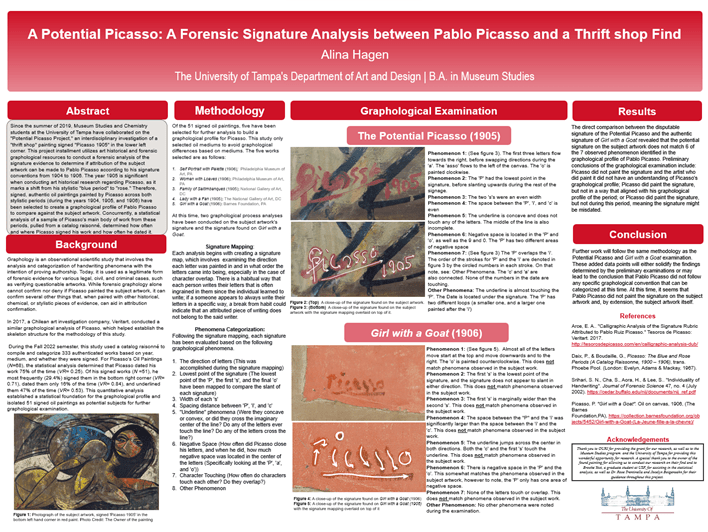
Figure 4: A screenshot of my FURC research presentation board
The direct comparison between the disputable signature of the Potential Picasso and the authentic signature of Girl with a Goat led to the conclusions that the potential signature on the subject artwork did not match 6 of the 7 observed characteristics identified in the graphological profile of Pablo Picasso. Preliminary conclusions of the graphological examination included: Picasso did not paint the signature and the artist who did paint it did not understand Picasso’s graphological profile; Picasso did paint the signature, but not in a way that aligned with his graphological profile of the period; or Picasso did paint the signature, but not during this period, meaning the signature might be misdated.
My experience at FURC was defiantly invaluable. For this project, I was accepted to FURC and the National Conference on Undergraduate Research (NCUR) (Which I will touch on later in this report), so FURC very much felt like a testing ground for my project to see how people responded to my research, if I had had any logical oversights, and how academic conferences in general worked. FURC was invaluable for offering me insight on how to report my research to people outside of my discipline, as well as what questions I needed to anticipate and address in my main presentation in the future. It also put me in an environment filled with academically minded individuals, which was incredibly valuable to me as someone who greatly enjoys academia and debating with my peers.
However, that being said, I did notice that there was a very large disparity between the different fields of study at this conference. FURC is very much a science conference, which is fantastic for people in STEM and social science fields. However, as an art historian, I really struggled to find my place at FURC, where I struggled to understand some of my peer’s research, and my peers struggled to understand mine. That is why I am so incredibly thankful that I submitted this project to multiple conferences and was given the opportunity to attend them.
Following my poster session at FURC, I immediately began finishing my graphological analyses with the following five signatures using the same process as I used for my FURC poster. However, when I conducted the analysis this time, I noticed several more characteristics, leading to my final graphological profile for Picasso, which included 11 different characteristics:
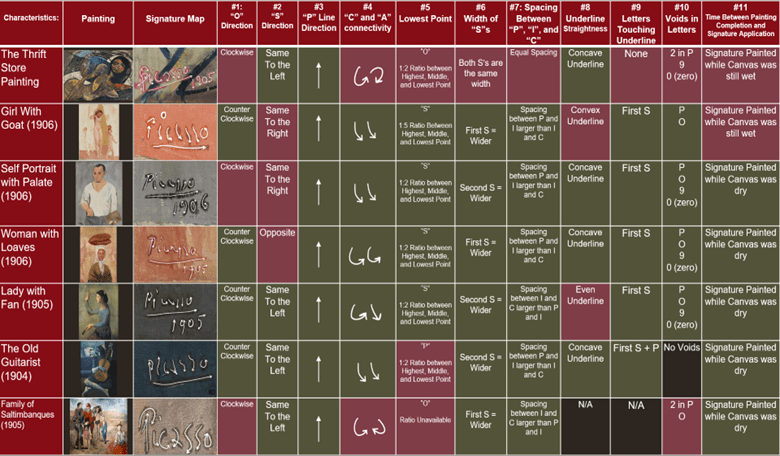
Figure 5: A Screenshot of my graphological profile chart from my NCUR oral presentation PowerPoint
By the end of my graphological analysis, the Potential Picasso Painting only matched three out of eleven observed characteristics seen in the graphological profile. In some cases the Thrift Store painting goes directly against what was observed in the authentic signatures, such as in characteristic 4, where in the Thrift Shop painting the “C” and the “A” form almost a ying-yang shape and circle around each other, while in the authentic signatures the “C” and the “A” all started from the top and flowed to the right. Even in cases where the observed characteristic is less than consistent, such as characteristics 6 and 7, the Thrift Store painting still manages to distinguish itself as something different from the graphological profile
While conducting my graphological analysis, I was also busy preparing for NCUR. NCUR was only 6 weeks following FURC, so preparations for the next conference had to begin immediately after returning home from FURC. My preparation for NCUR was very different from FURC, as I was giving an oral presentation rather than a poster presentation, so I did not need to create an updated research poster. Instead, I needed to find a way to try and condense my research into a 15 minute presentation, where I properly explained my methodology and results in a way that fully explained each process in a way that easy to understand and digest. This proved to be more difficult than I anticipated, however, with support from my mentors Dr. Rose Trentinella and Director Jocelyn Boigenzahn, I quickly developed a script and slide show presentation that I felt accurately represented the work I had been working on and felt confident in the material I was going to be speaking on.
And then it was 2 days before departure, and I hit a major snag.
During the signature mapping process, the first five out of the six authentic signature evaluations were relatively consistent, or at the very least, unsurprising in nature. When the final signature evaluation for Family of Saltimbanques (1905) was conducted, there was no question that itwas an authentic signature, but when compared against the other evaluations it was noticeably an outlier. What was surprising is the similarities shared between the Family and Potential Picasso painting, matching six out of nine relevant characteristics (because of Family’s lack of underline, characteristic 8 and 9 had to be excluded). This is a significant improvement from the greater graphological profile, where the Thrift Store painting only exhibited three of the eleven observed characteristics from the first 5 evaluations.
According to research from the National Gallery of Art, the holding institution for Family, this painting was created and redone multiple times over the course of 9 months from 1904 to 1905. This suggests that Picasso began this painting during his blue period, a time in Picasso’s life that was dominated by melancholy, and finished it during his rose period, where Picasso began to explore more regarding his relationships with other people, his stylistic choices, and drug use; implying that this painting was the product of Picasso’s mental and stylistic transition.
Discovering such a conclusion shattering piece of evidence was incredibly difficult to dissect and incorporate 2 days before departing for NCUR. In the end, after consulting my mentor and project partner, I decided to leave this possible research path open for future researchers, as I was unable to fully explore this development to its fullest extent and give it justice.
If I thought that my experience at FURC was invaluable, NCUR blew my expectations out of the water. NCUR offered a much broader perspective on everything, not just region, but subject matter, opinion, research biases. It was surreal to be at a conference with so many different levels and expertise.
I definently do believe my experience at both of these conferences was high valuable, as well as my exploration of different research presentation methods. While my future career aspirations do lean more towards poster style presentation, learning how to construct said research into a public friendly oral presentation is not something that will ever go to waste in a career. I think that URI should encourage students to attend multiple conferences and explore presentation methods, as it can offer incredibly useful insight into one’s strengths and weaknesses, as well as showcase how even different conferences can differ from one another. It also gives the student a safety net, where if one conference doesn’t go well, they have other experiences to look forward to and grow with. Overall, I think my experience at these two major conferences was defiantly the highlight of my academic experience at UT.
After returning home from NCUR, I did actually have to convert my oral presentation into a poster presentation for UT’s CALapalooza which really helped show me how far my research had come since FURC.
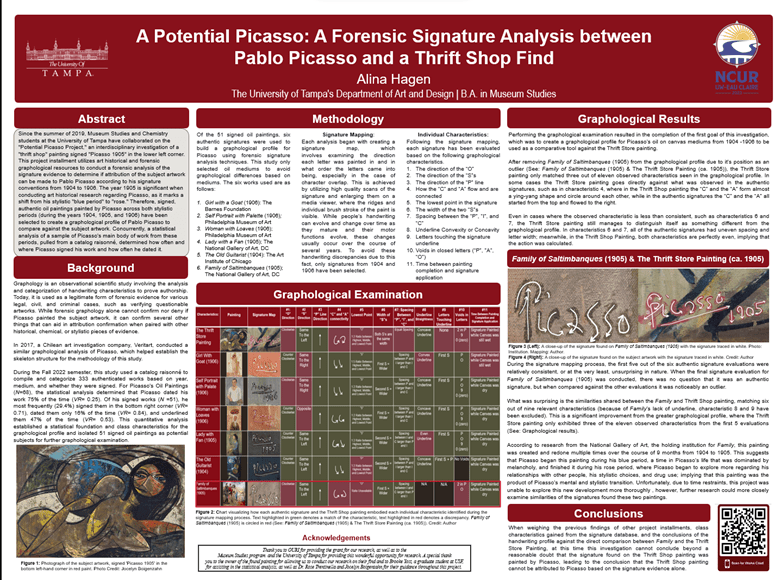
Figure 6: A screenshot of my CALapalooza research presentation board
Research Conclusions
When weighing the previous findings of other project installments, class characteristics gained from the signature database, and the conclusions of the handwriting profile against the direct comparison between Family of Saltimbanques (1905) and the Potential Picasso Painting, at this time this investigation cannot conclude beyond a reasonable doubt that the signature found on the Potential Picasso painting was painted by Picasso, leading to the conclusion that the Potential Picasso Painting cannot be attributed to Picasso based on the signature evidence alone.
Works Cited
Alina Hagen. “Handwriting Analysis: Forensic Graphology in the Federal Court System”. Unpublished manuscript, The University of Tampa, Department of Criminology, CRM 307-2, 15 November 2022. Typescript.
Arce, E. A.. “Calligraphic Analysis of the Signature Rubric Attributed to Pablo Ruiz Picasso.” Tesoros de Picasso: Veritart. 2017. http://tesorosdepicasso.com/en/calligraphic-analysis-dub/
Carmean Jr, E.A.,Hoenigswald, A. “Picasso’s Hidden Figures; Technology has revealed the earlier versions of Pablo Picasso’s ‘Family of Saltimbanques’ and the painting’s evolution”. Wall Street Journal, (June 1, 2018). https://www.proquest.com/docview/2048064084/citation/ABF4E909A2EC4776PQ/1
Daubert v. Merrel Dow Pharmaceuticals. 509 U.S. 579 (1993).
Fed. R. Evid. 702
Lewandowsky, S. (April 2018). Who kidnapped Charles Lindbergh, Jr? Forensic handwriting analysis and expertise. Psychonomic Society. https://featuredcontent.psychonomic.org/
who-kidnapped-charles-lindbergh-jr-forensic-handwriting-analysis-and-expertise/
Martine, K. A., Growns, B., & Navarro, D. J. (April 2018). What do the experts know? Calibration, precision, and the wisdom of crowds among forensic handwriting experts. Psychonomic Bulletin & Review, 25:2346–2355. https://link.springer.com/article/10.3758/s13423-018-1448-3#Sec10
Mishra A.. Forensic Graphology: Assessment of Personality. Forensic Research & Criminology International Journal 4, no 1:9-12. (January, 2017) DOI: 10.15406/frcij.2017.04.00097
Picasso, P. Family of Saltimbanques, 1905, (The National Gallery of Art, DC), https://www.nga.gov
/collection/art-object-page.46665.html
Picasso, P. Girl with a Goat. Oil on canvas, 1906, (The Barnes Foundation, PA), https://collection.barnesfoundation.org/objects/5452/Girl-with-a-Goat-(La-Jeune-fille-a-la-chevre)/
Picasso, P. Lady with Fan. Oil on canvas, 1905, (The National Gallery of Art, DC), https://www.nga.
gov/collection/art-object-page.53137.html
Picasso, P. Self Portrait with Palette. Oil on canvas, 1906, (The Philadelphia Museum of Art, PA), https://philamuseum.org/collection/object/50947
Picasso, P. The Old Guitarist, 1904, (The Art Institute of Chicago), https://www.artic.edu/artworks
/28067/the-old-guitarist
Picasso, P. Women with Loaves. Oil on canvas, 1906, (The Philadelphia Museum of Art, PA), https://philamuseum.org/collection/object/44460
Pierre Daix and Georges Boudaille, Picasso: The Blue and Rose Periods (A Catalog Raissonne, 1900 – 1906), trans. Phoebe Pool. (London: Evelyn, Adams & Mackay, 1967).
Srihari, S. N., Cha, S., Aora, H., & Lee, S. (July 2002). Individuality of Handwriting. Journal of Forensic Science, 47(4). https://cedar.buffalo.edu/nij/documents/nij_ref.pdf
State v. Hauptmann, 180 U.S. 809 (1935).
United States vs. Paul, 97 U.S. 9302, (1999).
 HAGEN // ANALYTICS
Leave a comment